
Kodo millet, known as varagu in Tamil, is a quietly dependable grain — nutty, hardy and easy on the stomach. It is one of the simplest millets to adopt as an everyday rice alternative.
What is kodo millet?
Varagu, or kodo millet, is a small, hardy grain traditionally grown across India's drylands. It has a gentle, nutty flavour and a satisfying texture.
Eaten whole, it keeps the fibre and minerals that make millets worthwhile, offering more than polished rice in the same bowl.
Benefits of varagu
Kodo millet is valued for its high fibre content, which supports fullness, gut comfort and steadier energy after meals.
It is also easy to digest, making it a sensible choice for everyday meals across the family.
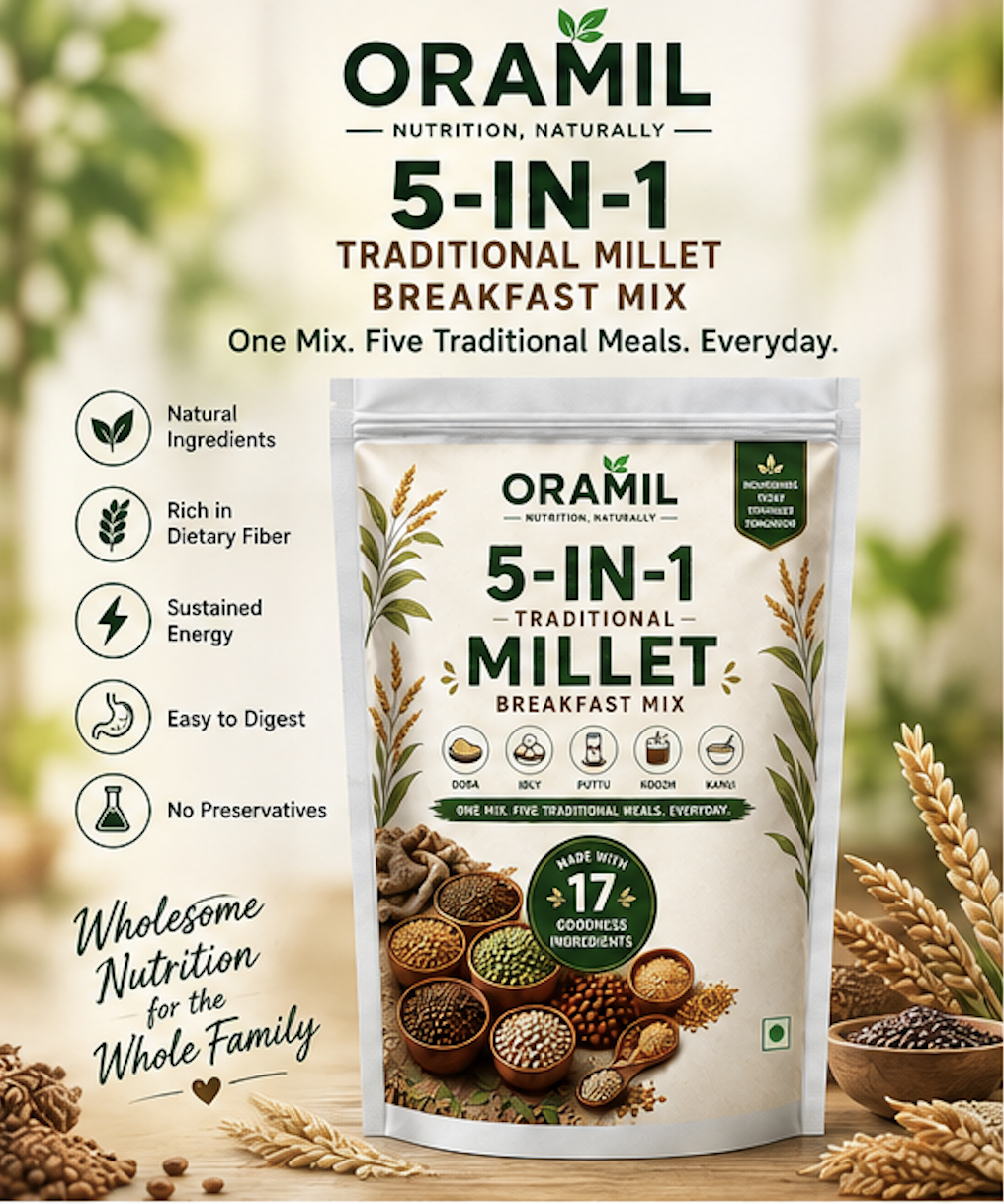
ORAMIL 5-in-1 Millet Mix
17 traditional millets, grains, pulses and seeds in one mix — make Dosa, Idly, Puttu, Koozh and Kanji from a single pack, no preservatives.
Explore 5-in-1 Millet MixHow to use kodo millet
Varagu works wonderfully in simple preparations — lemon varagu, tamarind varagu, or plain cooked varagu with sambar and vegetables.
It also blends well into dosa and idly batter. A ready millet mix that includes varagu removes the need to cook and grind it separately.
Who benefits from varagu
Anyone looking to swap some polished rice for a higher-fibre grain will find kodo millet an easy, familiar replacement.
Its digestibility makes it friendly for children and older family members alike, as part of a varied diet.
Cooking it well
Rinse varagu, then cook with a little extra water until soft and fluffy. A short rest after cooking helps the grains settle.
As always, rotate it with other millets so your week carries variety rather than leaning on one grain.
Frequently asked questions
Is kodo millet good for diabetics?
As a high-fibre whole grain, kodo millet is often recommended in place of polished rice for people managing blood sugar, under their doctor's guidance on portions.
How is varagu different from rice?
Varagu is a whole millet with more fibre and a nuttier taste than polished white rice. It cooks similarly but needs a little more water and time.
Can I eat kodo millet daily?
Yes, as part of a varied diet. Rotating kodo with other millets gives a broader range of nutrients and keeps meals interesting.
ORAMIL 5-in-1 Millet Mix
17 traditional millets, grains, pulses and seeds in one mix — make Dosa, Idly, Puttu, Koozh and Kanji from a single pack, no preservatives.
Explore 5-in-1 Millet MixKeep reading: ragi (finger millet): benefits, nutrition and how to use it, bajra (pearl millet): benefits and everyday uses, and jowar (sorghum): the versatile everyday millet.