
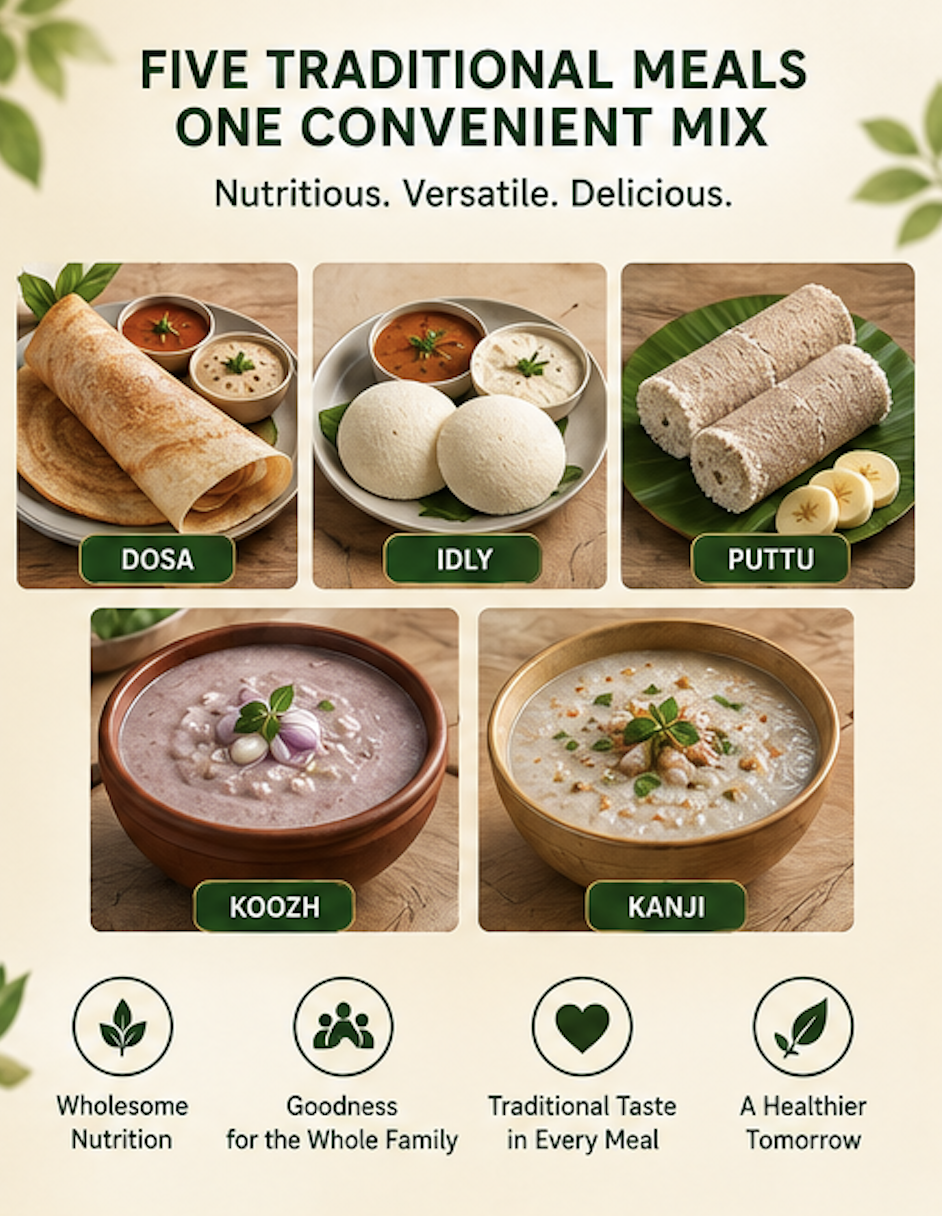
There's a reason your grandmother's breakfast table never went out of fashion in the homes that kept it. A plate of idly with chutney, a crisp dosa, a cool tumbler of koozh on a summer morning — these are not just comfort foods. They're some of the most sensibly built meals in the world: whole grains and pulses, often fermented, usually steamed or lightly cooked, and genuinely satisfying. Let's walk through the classics, and then the one thing that makes them realistic on a Monday morning.
Why these breakfasts have lasted generations
Three quiet pieces of wisdom sit inside the traditional South Indian breakfast. First, the grain-and-pulse pairing: rice or millet combined with urad dal or moong isn't an accident. Together they make a more complete protein than either alone — folk nutrition that modern science later confirmed.
Second, fermentation. Idly and dosa batter is left to ferment overnight, which makes the food lighter, easier to digest, and friendlier to the gut. It's the same principle behind many celebrated "fermented foods" today, practised in Tamil and Telugu kitchens for centuries.
Third, gentle cooking. Idly is steamed. Koozh and kanji are simmered. Puttu is steamed. Very little oil, no deep frying, nothing harsh. The result is a breakfast that gives steady energy without sitting heavy — exactly what you want before a day of school or work.
When these dishes are made with millets instead of only polished rice, they get even better: more fibre, more minerals, and a slower release of energy. That's the version worth bringing back.
The five you can make from one mix
These five are the backbone of the South Indian morning — and remarkably, all five can come from a single millet breakfast blend, because they share the same base of millets, rice and pulses at different consistencies.
1. Dosa
The crisp, golden crepe that needs no introduction. A millet dosa carries a lovely nutty depth and crisps up beautifully. Make the batter slightly thin, spread it on a hot tawa, drizzle a little oil at the edges, and serve with chutney or sambar. It's the most forgiving place to start if your family is new to millets.
2. Idly
Soft, steamed, cloud-light. The same millet base, kept thicker and rested to ferment, goes into idly moulds and steams in minutes. Idly is the gentlest breakfast of all — perfect for children, elders and anyone who wants something easy on the stomach. Pair with coconut chutney and a bowl of sambar.
3. Puttu
A Kerala and Tamil favourite — steamed cylinders of grain layered with grated coconut. Puttu made with millets is fragrant and filling, traditionally eaten with banana and a little jaggery, or with a savoury kadala (chickpea) curry. It's a wholesome, hands-on breakfast kids love to assemble.
4. Koozh
Perhaps the most underrated health food in Tamil Nadu. Koozh is a millet porridge — often ragi or kambu — fermented slightly and served cool with buttermilk, chopped onions, green chilli and a pickle on the side. On a hot morning it's hydrating, cooling and keeps you going for hours. Farmers have carried it to the fields for generations because it simply works.
5. Kanji
The gentle, restorative porridge given to anyone who's unwell, and eaten by everyone else for its comfort. Millet kanji is soft, warm and easy to digest, seasoned simply or sweetened lightly. It's the breakfast equivalent of a reassuring hand on the shoulder.
One batter, rested thin, becomes dosa. The same batter, thick, becomes idly. Simmered with more water, it becomes koozh or kanji. That's the quiet genius of the traditional pantry — and exactly why a single mix can cover a week of breakfasts.
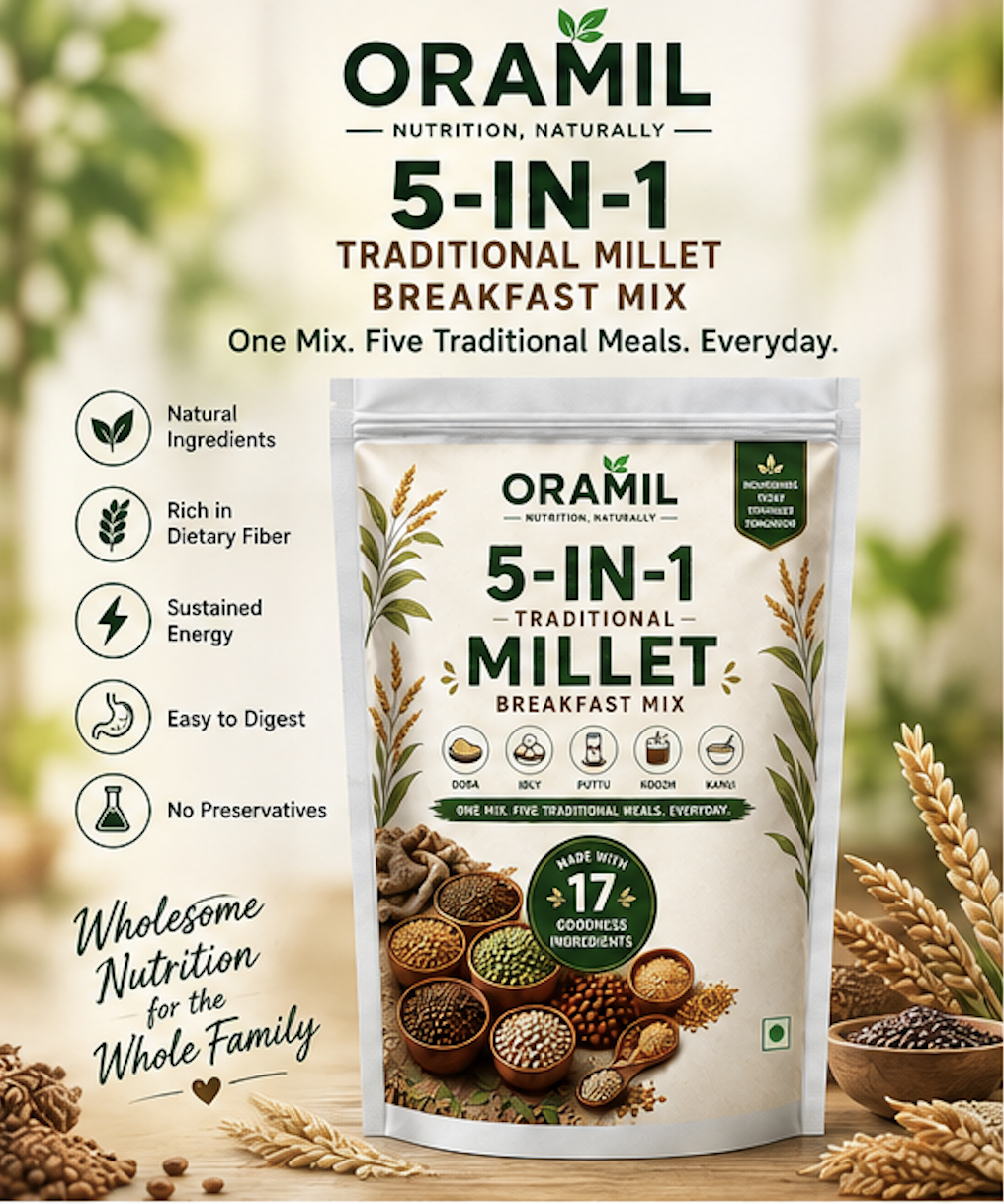
ORAMIL 5-in-1 Millet Mix
17 traditional millets, grains, pulses and seeds, blended so you can make Dosa, Idly, Puttu, Koozh and Kanji from one convenient mix. No preservatives, no measuring a dozen grains.
Explore 5-in-1 Millet MixTen more traditional morning meals
Beyond the core five, the South Indian breakfast repertoire is deep. Here are ten more classics worth rotating through — many of which also work beautifully with millets.
6. Ragi mudde / ragi malt
A Karnataka staple — finger millet cooked into soft balls or a drinkable malt. Rich in calcium, it's a traditional strength-builder for growing children and hard-working adults alike.
7. Pongal
Comforting rice-and-dal (or millet-and-dal) cooked soft with pepper, cumin, ginger and ghee. Ven pongal is savoury and warming; a millet version adds extra fibre to a beloved dish.
8. Upma
Quick, savoury and endlessly adaptable. Made with roasted rava or with foxtail/little millet, upma comes together in minutes with onions, curry leaves and vegetables.
9. Adai
A protein-rich, thicker cousin of the dosa, packed with mixed dals. Adai is hearty enough to carry you through a long morning and pairs wonderfully with avial or jaggery.
10. Uttapam
A thick, soft pancake topped with onion, tomato and chilli. Made from a millet batter, it's a satisfying, vegetable-forward start to the day.
11. Idiyappam (string hoppers)
Delicate steamed rice-flour noodles, light and lovely with coconut milk or a thin curry. A gentle, elegant breakfast.
12. Sevai
Steamed rice vermicelli tossed with lemon, coconut or tamarind. Quick to flavour and easy for kids to eat.
13. Kuzhi paniyaram
Little golden spheres cooked in a special pan from leftover dosa/idly batter — crisp outside, soft inside, in savoury or sweet versions. A brilliant way to use up batter and delight children.
14. Semiya / vermicelli kichadi
A soft, savoury vermicelli preparation with vegetables — comforting and fast.
15. Sweet pongal (sakkarai pongal)
For a festive or weekend treat: grains cooked with jaggery, ghee, cashews and cardamom. Indulgent, yes — but built on real ingredients rather than refined sugar and packaged mixes.
Making it work on a weekday
Here's the honest obstacle: the traditional method is a two-day affair. Soak the rice and dal, grind them, let the batter ferment overnight, then cook. Wonderful for a relaxed weekend — impossible at 7am on a school day.
This is precisely why so many families drifted to cereal and bread. The food wasn't the problem; the process was. The fix isn't to abandon the tradition — it's to remove the friction.
A ready millet breakfast mix does exactly that. The millets, rice and pulses are already selected and blended in the right proportion. You simply add water to reach the consistency you want — thinner for dosa, thicker for idly, looser for koozh or kanji — and cook. What used to take two days of planning becomes a few minutes of actual work. Our 5-in-1 Millet Mix was created for this exact moment: the busy morning when you still want to feed your family something real.
Tips for perfect results every time
Get the consistency right. Dosa batter should coat the back of a spoon and pour easily; idly batter should be thick enough to hold a soft peak. Add water a little at a time — you can always loosen, but you can't un-pour.
Rest for flavour. If you have the time, letting the batter sit for a few hours develops a gentle fermented tang and makes idly fluffier. Short on time? It still cooks up well fresh.
Season the tawa. For dosa, a well-heated, lightly oiled pan is everything. Sprinkle a few drops of water — it should sizzle and vanish — before spreading the batter.
Serve koozh cool, not cold. Let the millet porridge come down to room temperature or just below, then stir in buttermilk and the fresh accompaniments right before eating.
Keep the sides simple. A good coconut chutney, a sambar, or just buttermilk and pickle is all these breakfasts need. Let the grain be the star.
Frequently asked questions
Why are traditional South Indian breakfasts considered healthy?
Classics like idly, dosa, koozh and kanji are built on whole grains, millets and pulses, are often fermented (which aids digestion), and are typically steamed or cooked with little oil. That combination of fibre, plant protein and gentle cooking makes them filling and easy on the stomach.
Can I make dosa and idly from a millet mix?
Yes. A good millet breakfast mix already contains the right balance of millets, rice and pulses, so you simply add water to reach a batter consistency, rest it if you like a fermented tang, and cook as usual. The same mix can be made thinner for dosa or thicker for idly.
What is koozh and is it good for you?
Koozh is a traditional Tamil porridge, often made from millets like ragi or kambu, served cool with buttermilk, onions and chillies. It's hydrating, high in fibre, and a time-tested way to stay energised through hot afternoons.
How can I make traditional breakfasts on a busy weekday?
Use a ready millet breakfast mix. Instead of soaking and grinding several grains, you add water to the mix for dosa or idly batter, or cook it into a porridge for koozh and kanji. It turns a two-day process into a few minutes. Our 5-in-1 Millet Mix is built for this.
Are these breakfasts suitable for children?
Yes. Idly, soft dosa and mild porridges are gentle, familiar and easy for children to eat. Because they're made from wholesome grains and pulses, they give steady morning energy for school without a sugar rush.
Dosa, Idly, Puttu, Koozh & Kanji from one mix
Give your family the breakfast our grandparents thrived on — without the two-day process. ORAMIL 5-in-1 makes it a weekday reality.
Shop 5-in-1 Millet MixKeep reading: the complete guide to millets for Indian families and healthy chocolate drinks for kids without refined sugar.