
If you are nervous that millets will taste too different, jowar is where to begin. Mild, soft and endlessly adaptable, sorghum slips into everyday meals so easily that your family may not even notice the switch.
What is jowar?
Jowar, known as sorghum in English and cholam in Tamil, is a staple grain across Maharashtra, Karnataka and much of India. Its neutral flavour is its superpower, letting it stand in for rice or wheat in many dishes.
Like other whole millets, jowar keeps its fibre and nutrients intact, giving it an edge over refined flour.
The benefits of jowar
Jowar brings fibre, plant protein and minerals to the table, and its slow-digesting nature supports steadier energy through the day.
Being naturally gluten-free, it is a useful grain for anyone reducing wheat, while still producing satisfying rotis and porridges.
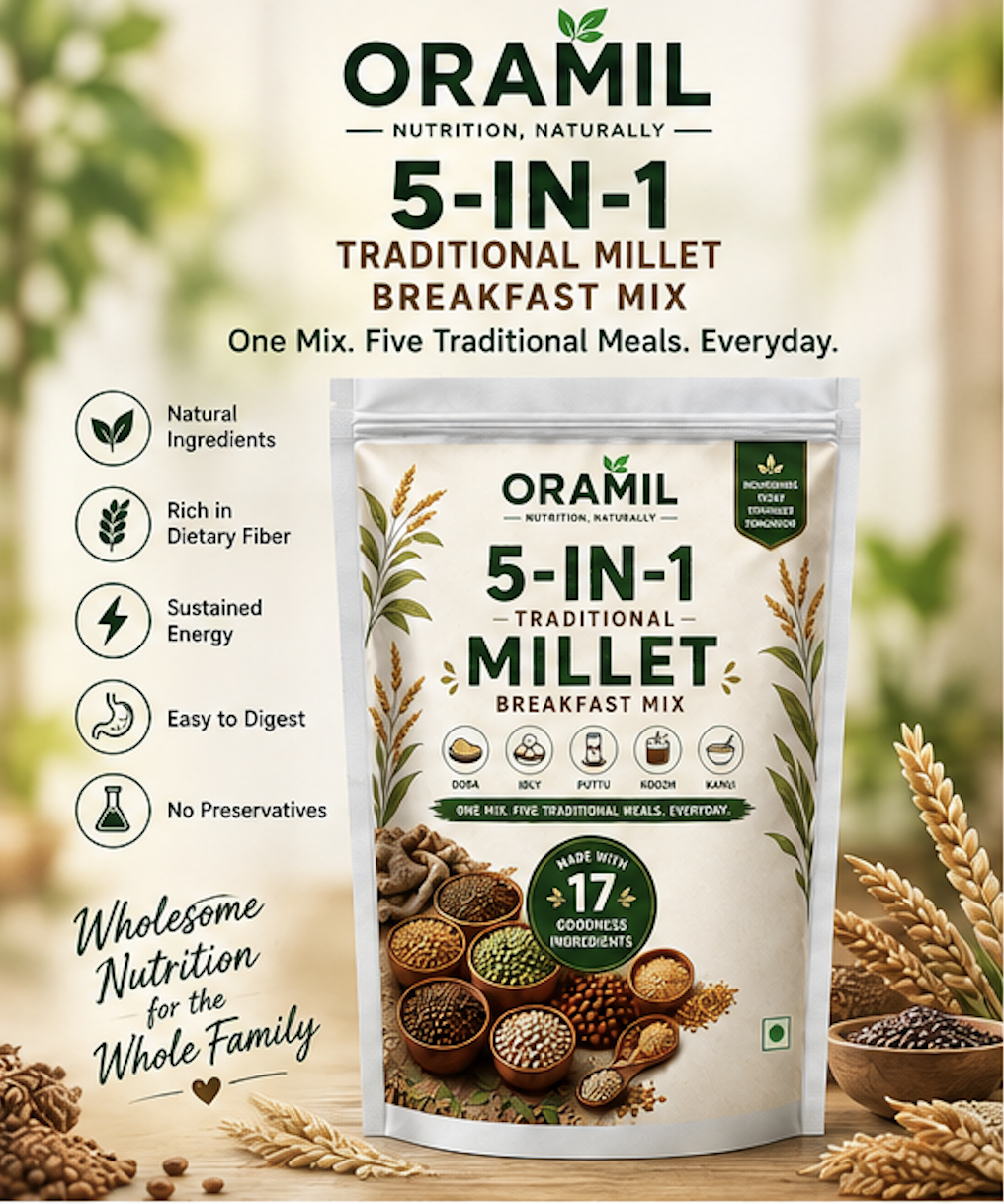
ORAMIL 5-in-1 Millet Mix
17 traditional millets, grains, pulses and seeds in one mix — make Dosa, Idly, Puttu, Koozh and Kanji from a single pack, no preservatives.
Explore 5-in-1 Millet MixCooking with jowar
Jowar roti, or bhakri, is the signature dish, soft and comforting alongside a vegetable curry. The grains can also be popped like tiny popcorn for a light snack, and jowar flour works in cheelas and porridge.
For a quick start, look for a millet breakfast mix that includes jowar so you can make familiar dosa and idly without separate grinding.
Why jowar suits beginners
Because its flavour is so mild, jowar is the gentlest way to introduce millets to a family used to rice and wheat. Change the grain, keep the dish, and the transition feels natural.
Children in particular tend to accept jowar readily, which makes it a practical first millet for the whole household.
Making jowar a habit
Start by swapping jowar into one or two meals a week, then build from there. Pair it with dals and vegetables for a balanced plate.
Over time, rotating jowar with ragi, bajra and the smaller millets gives your meals both variety and a broader nutritional base.
Frequently asked questions
Does jowar taste different from wheat?
Jowar is milder and slightly sweeter than wheat, with a softer texture. Most people find jowar roti easy to enjoy, which is why it is a popular first millet.
Is jowar good for diabetics?
As a high-fibre whole grain, jowar is often suggested in place of refined grains for people managing blood sugar. Anyone with diabetes should follow their own doctor's guidance on quantities.
Can jowar be eaten daily?
Yes, jowar can be part of a daily varied diet. Rotating it with other millets ensures a wider spread of nutrients across the week.
ORAMIL 5-in-1 Millet Mix
17 traditional millets, grains, pulses and seeds in one mix — make Dosa, Idly, Puttu, Koozh and Kanji from a single pack, no preservatives.
Explore 5-in-1 Millet MixKeep reading: ragi (finger millet): benefits, nutrition and how to use it, bajra (pearl millet): benefits and everyday uses, and foxtail millet (thinai): benefits, uses and recipes.