
Walk down any supermarket aisle and you'll see smiling children on boxes promising height, sharpness and strength. As a parent, it feels like the responsible choice. But flip the box over and read the ingredients, and a different story often appears — one where sugar sits near the very top of the list. This article is about seeing past the packaging and choosing a chocolate drink your child will love and that you can feel good about.
The health-drink sugar problem
Here's the uncomfortable truth behind many popular malt and chocolate "health drinks": a large portion of what's in the tin is sugar. In several widely sold products, sugar is among the first two or three ingredients — and by food-labelling convention, ingredients are listed in descending order by weight. That means the drink marketed for your child's growth may contain more sugar than almost anything else.
A drink can still be enjoyable now and then. The problem is positioning something that's largely sweetener as daily nutrition. When a child drinks it every morning and every evening, those spoons of added sugar add up fast — displacing appetite for real food, contributing to energy spikes and crashes, and setting up a taste for very sweet things that's hard to unlearn.
None of this means chocolate is the enemy. Cocoa itself is a wonderful ingredient. The issue is what's blended around the cocoa. Get that right, and a chocolate drink becomes a genuinely good part of a child's day.
How to read the label like a pro
You don't need a nutrition degree — just a few habits.
Check where sugar sits. Scan the ingredient list (not the marketing on the front). If sugar, glucose syrup, maltodextrin or similar sweeteners appear in the first few ingredients, the product is sugar-led. If instead you see nuts, grains, seeds, cocoa and milk solids first, with a natural sweetener lower down, that's a much better sign.
Count the sugar names. Manufacturers sometimes split sweeteners across several names (sugar, glucose syrup, dextrose) so no single one looks dominant. If you spot three or four different sugars, add them up mentally.
Look at "added sugar" per serving. The nutrition panel usually breaks this out. Compare it against a child's daily allowance (more on that below).
Beware the buzzwords. "Fortified", "with 24 nutrients", "doctor recommended" — these say nothing about sugar content. A fortified drink that's half sugar is still half sugar.
Shorter is usually better. A short list of recognisable, real ingredients tends to beat a long list full of additives, artificial colours and flavour enhancers.
The front of the box is an advertisement. The back of the box is the truth. Always turn it over.
How much sugar is too much for a child?
Health authorities around the world advise keeping added sugar low for children. A common guideline is no more than roughly 5 to 6 teaspoons — about 20 to 25 grams — of added sugar per day for school-age children, and less for younger ones. Added sugar is the sugar put into products during manufacturing, as opposed to the sugar naturally present in fruit or milk.
Here's why that matters: a single glass of a heavily sweetened health drink can use up a big share of that daily allowance before breakfast is even finished. Add a biscuit, a juice box and a treat later, and a child can sail well past the recommendation without anyone noticing. Choosing drinks and snacks with less added sugar — and relying on natural sweeteners used sparingly — keeps that daily budget under control while still letting kids enjoy a chocolate drink they like.
What a genuinely good mix looks like
A chocolate nutrition mix worth giving your child every day should, ideally, tick these boxes:
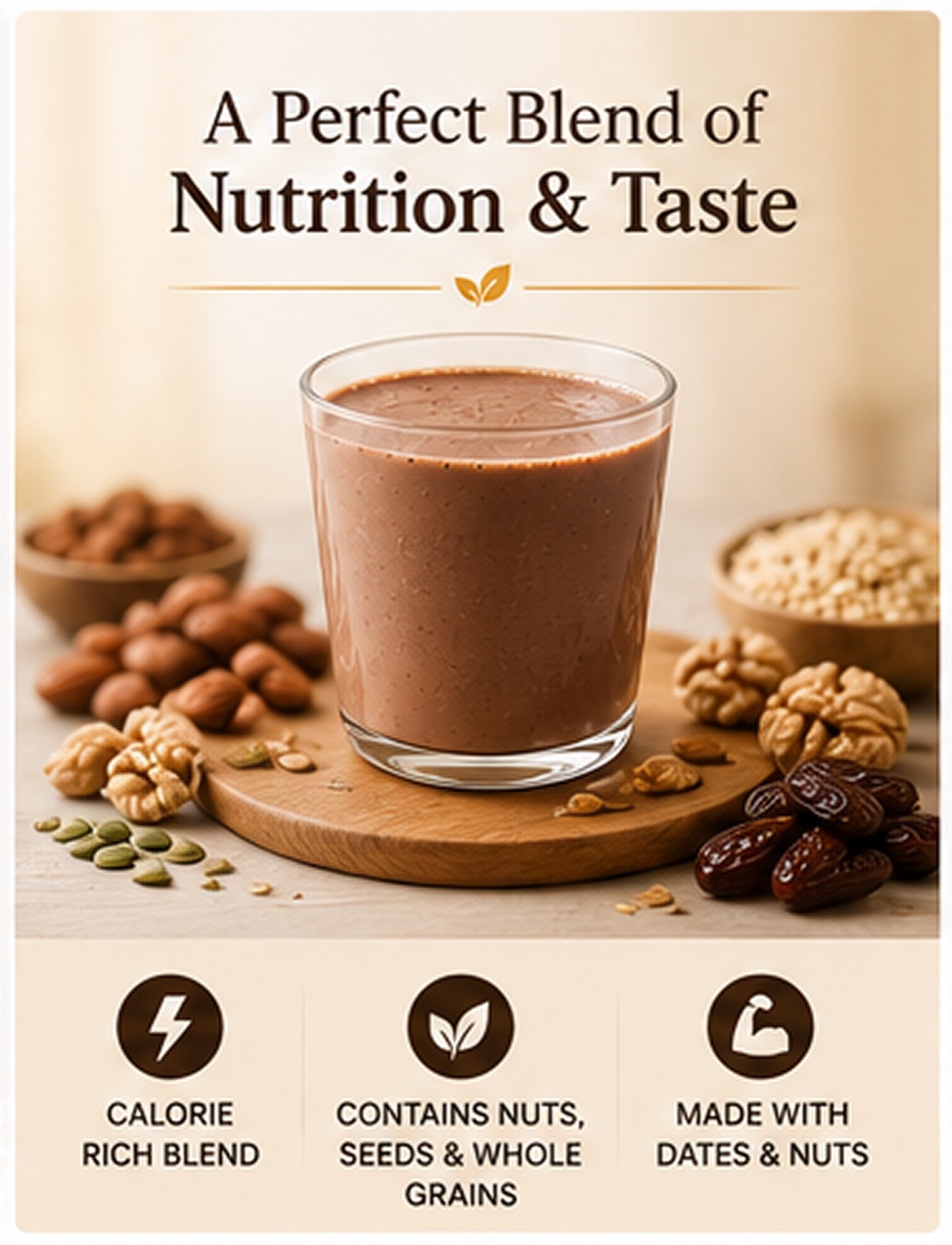
Real food first. The bulk should be wholesome ingredients — almonds, cashews, walnuts, oats, pumpkin seeds, sunflower seeds, flax, whole grains and millets — not sweetener.
Natural sweetness, used lightly. Dates and jaggery can bring sweetness along with flavour and a little mineral content, rather than relying on refined white sugar as the main event.
Genuine cocoa for taste. Real cocoa gives the chocolate flavour kids want, so you don't need heaps of sugar to make the drink appealing.
No artificial colours or preservatives. Children don't need synthetic dyes or shelf-life chemicals in a daily drink.
Honest, readable ingredients. If you can read the list aloud and recognise every item as food, you're on the right track.

ORAMIL Smart+
A chocolate nutrition mix led by premium nuts, seeds and whole grains, sweetened with jaggery and dates — no artificial colours, no preservatives. The chocolate taste kids ask for, built on ingredients you can read.
Explore Smart+The ORAMIL approach
We built our chocolate mixes backwards from the label. Instead of starting with cheap sweetener and adding a little nutrition for the marketing, we start with the good stuff and use natural sweetness sparingly to make it delicious. Three blends cover different needs:
Smart+ is our premium chocolate nutrition mix — almonds, walnuts, cashews, oats, pumpkin, sunflower and flax seeds, cocoa and milk powder, sweetened with jaggery and dates. It's the everyday favourite for children, students and the whole family.
Energy+ is crafted for busy, active days — wholesome grains, premium nuts, cocoa, milk powder, dates and jaggery, for a satisfying chocolate drink that carries kids and adults through long mornings and pre-study slumps.
Everyday+ is the balanced daily blend for the whole family, adding millets and makhana to oats, nuts, seeds, cocoa and milk powder — gentle enough for kids, adults and seniors alike.
Every one of them is made without artificial colours or preservatives, in small batches, so what reaches your child's glass is food first and chocolate treat second — in the right order.
Getting a fussy child to drink it
A wholesome drink only helps if your child will actually drink it. The good news: when the base genuinely tastes of chocolate, this gets much easier. A few tactics that work:
Lead with the flavour they know. Kids trust chocolate. Introduce the mix as "chocolate milk", because that's exactly what it is — just a better version.
Serve it cold or blended. Many children prefer a cold chocolate drink or a quick smoothie with a banana over warm milk. Experiment with temperature and texture.
Let them make it. Children drink what they help create. Let them spoon in the mix and stir — the ritual builds buy-in.
Go gradual. If you're switching from a very sweet drink, transition over a couple of weeks so their palate adjusts to less sugar. Tastes recalibrate faster than you'd expect.
Pair, don't preach. Serve it alongside a breakfast they like rather than announcing it's "healthy". The less it feels like a lecture, the more they'll enjoy it.
Frequently asked questions
Are store-bought health drinks actually healthy for children?
Many popular malt-based health drinks are high in added sugar, with sweeteners often appearing among the first ingredients. They can be fine as an occasional treat, but a drink that's largely sugar isn't meaningful daily nutrition. Always read the label and check where sugar sits in the ingredient list.
How much added sugar should a child have per day?
Health authorities generally advise keeping added sugar low — commonly no more than about 5 to 6 teaspoons (roughly 20-25 grams) a day for school-age children, and less for younger ones. A single glass of a sugary health drink can use up much of that allowance, which is why lower-added-sugar options matter.
What should I look for in a healthy chocolate mix for kids?
Look for real ingredients listed first — nuts, seeds, whole grains, cocoa and milk powder — with natural sweeteners like jaggery or dates rather than refined sugar high on the list. Avoid artificial colours and preservatives, and favour short, recognisable ingredient lists.
Is jaggery better than refined sugar for kids?
Jaggery is still a sugar and should be used in moderation, but it's less processed than white sugar and retains small amounts of minerals. As a natural sweetener within a mix built on nuts, seeds and grains, it's a more wholesome choice than refined sugar as the main ingredient.
How do I get a fussy child to drink a healthy mix?
Start with a familiar chocolate flavour kids already enjoy, serve it cold or as a smoothie, involve them in making it, and introduce it gradually alongside foods they like. A genuinely tasty mix with real cocoa makes this far easier than a bland "healthy" drink.

Explore the ORAMIL chocolate mixes
Smart+, Energy+ and Everyday+ — three wholesome chocolate nutrition blends made with real nuts, seeds and grains, sweetened naturally, with no artificial colours or preservatives.
See all mixesKeep reading: the complete guide to millets for Indian families and 15 traditional South Indian breakfasts from one mix.