
If there is one millet almost every South Indian grandmother trusted, it is ragi. Reddish-brown, earthy and quietly nutritious, finger millet has fed babies, farmers and elders for generations. Here is what makes it special and how to bring it back into your kitchen without fuss.
What is ragi?
Ragi, known as finger millet or keppai in Tamil, is one of the oldest cultivated grains in India. It grows in dry conditions, stores well, and has sustained communities through lean seasons for thousands of years.
Unlike polished white rice, ragi is eaten whole, which means it keeps its fibre-rich bran and nutrient-dense germ. That is the reason it carries more minerals and slow-releasing energy than the refined staples that gradually replaced it.
The nutrition that makes ragi stand out
Ragi is best known as a plant source of calcium, which is unusual and valuable in a grain. It also contributes iron, fibre and a range of B vitamins as part of a balanced diet.
Because it is a whole grain high in fibre, ragi digests slowly. That steady release is why it keeps you full for longer and avoids the mid-morning energy slump that heavy white-rice meals can bring.
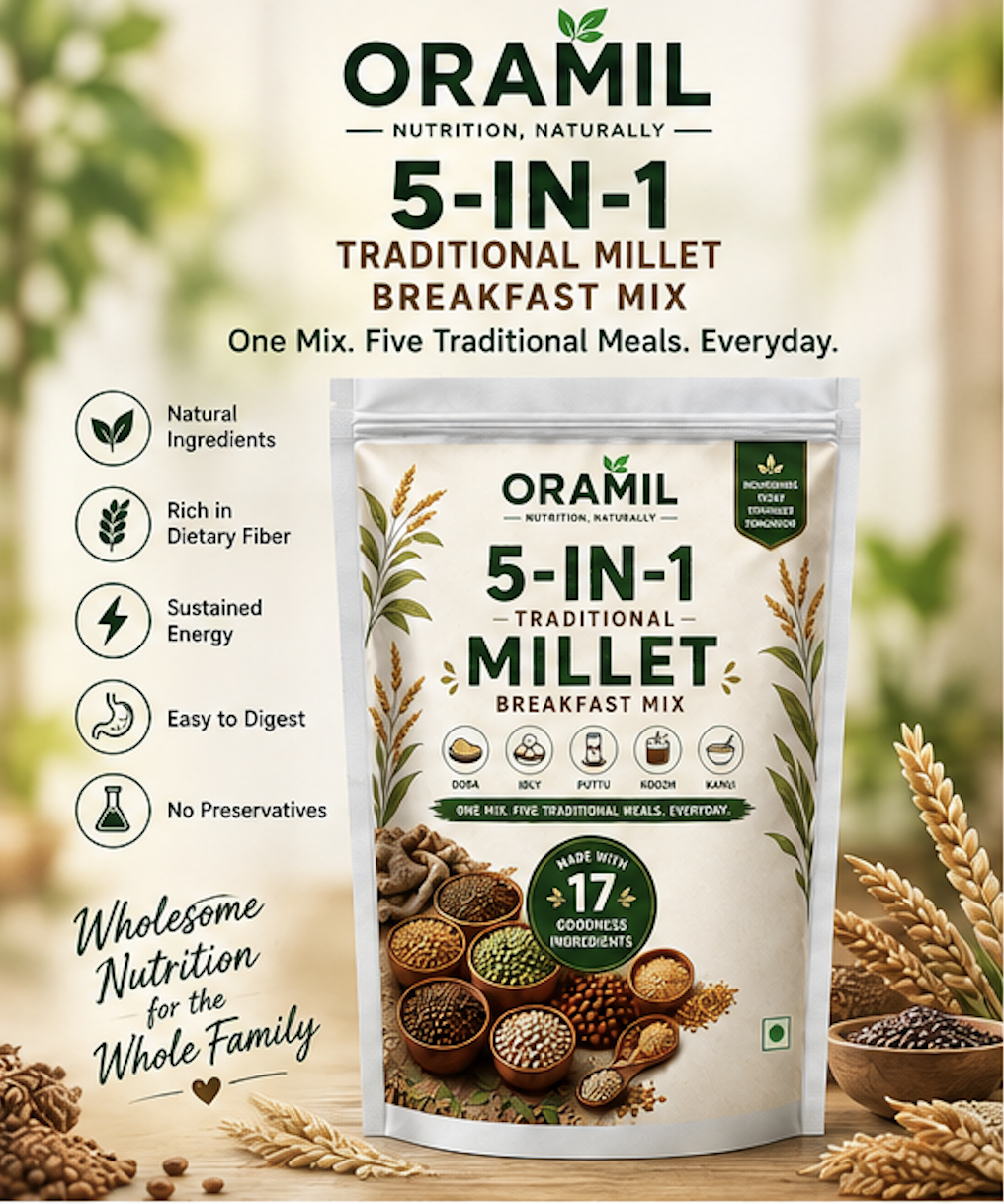
ORAMIL 5-in-1 Millet Mix
17 traditional millets, grains, pulses and seeds in one mix — make Dosa, Idly, Puttu, Koozh and Kanji from a single pack, no preservatives.
Explore 5-in-1 Millet MixWho benefits most from ragi
Ragi is a traditional first weaning food for babies in many Indian homes, usually cooked into a soft porridge. Growing children benefit from its minerals and steady energy, especially in familiar formats like dosa.
Older family members often find ragi gentle and easy to digest, and anyone watching their blood sugar is frequently advised by nutritionists to favour whole grains like ragi over polished rice — guided, as always, by their own doctor.
How to use ragi at home
The easiest wins are familiar dishes. Ragi dosa is nutty and crisp, ragi koozh is a cooling summer porridge served with buttermilk, and ragi mudde or malt is a classic strength food.
You do not need to cook ragi alone to benefit. A good traditional breakfast mix already blends ragi with other millets, grains and pulses, so you simply add water and make dosa, idly or porridge.
A note on balance
Ragi is food, not medicine. It helps most when it replaces some refined grain rather than being added on top of an already heavy diet. Introduce it gradually, drink enough water with the extra fibre, and rotate it with other millets for variety.
Eaten this way, ragi is one of the simplest upgrades you can make to everyday family meals.
Frequently asked questions
Is ragi good for weight loss?
Ragi is high in fibre and keeps you full, which can help you eat less overall. It supports weight management as part of a balanced diet and active lifestyle, but no single grain causes weight loss on its own.
Can babies eat ragi?
Yes. Ragi porridge is a traditional first food in many Indian homes. Introduce it gradually, cook it soft, and watch for any allergies, ideally with guidance from your paediatrician.
Is ragi better than rice?
As a whole grain, ragi generally offers more fibre and minerals than polished white rice. Rather than replacing rice entirely, many families simply rotate ragi and other millets through the week.
ORAMIL 5-in-1 Millet Mix
17 traditional millets, grains, pulses and seeds in one mix — make Dosa, Idly, Puttu, Koozh and Kanji from a single pack, no preservatives.
Explore 5-in-1 Millet MixKeep reading: bajra (pearl millet): benefits and everyday uses, jowar (sorghum): the versatile everyday millet, and foxtail millet (thinai): benefits, uses and recipes.