
Bajra is the grain of warmth. From Rajasthani bajra roti to Tamil kambu dosa, this hardy millet has kept families nourished through cold mornings and long working days. Here is why it deserves a place in your kitchen.
What is bajra?
Bajra, called pearl millet in English and kambu in Tamil, is a robust grain that thrives in dry, hot regions where little else grows. That resilience made it a staple across western and southern India.
It has a slightly dense, earthy character that makes it especially satisfying, which is one reason it is traditionally eaten more in the cooler months.
Why bajra is valued
Bajra is a good source of iron and magnesium, and like all whole millets it brings fibre and slow-releasing energy to a meal.
Its filling nature means a bajra breakfast tends to carry you well into the day, which is why it has long been the choice of farmers and physical workers.
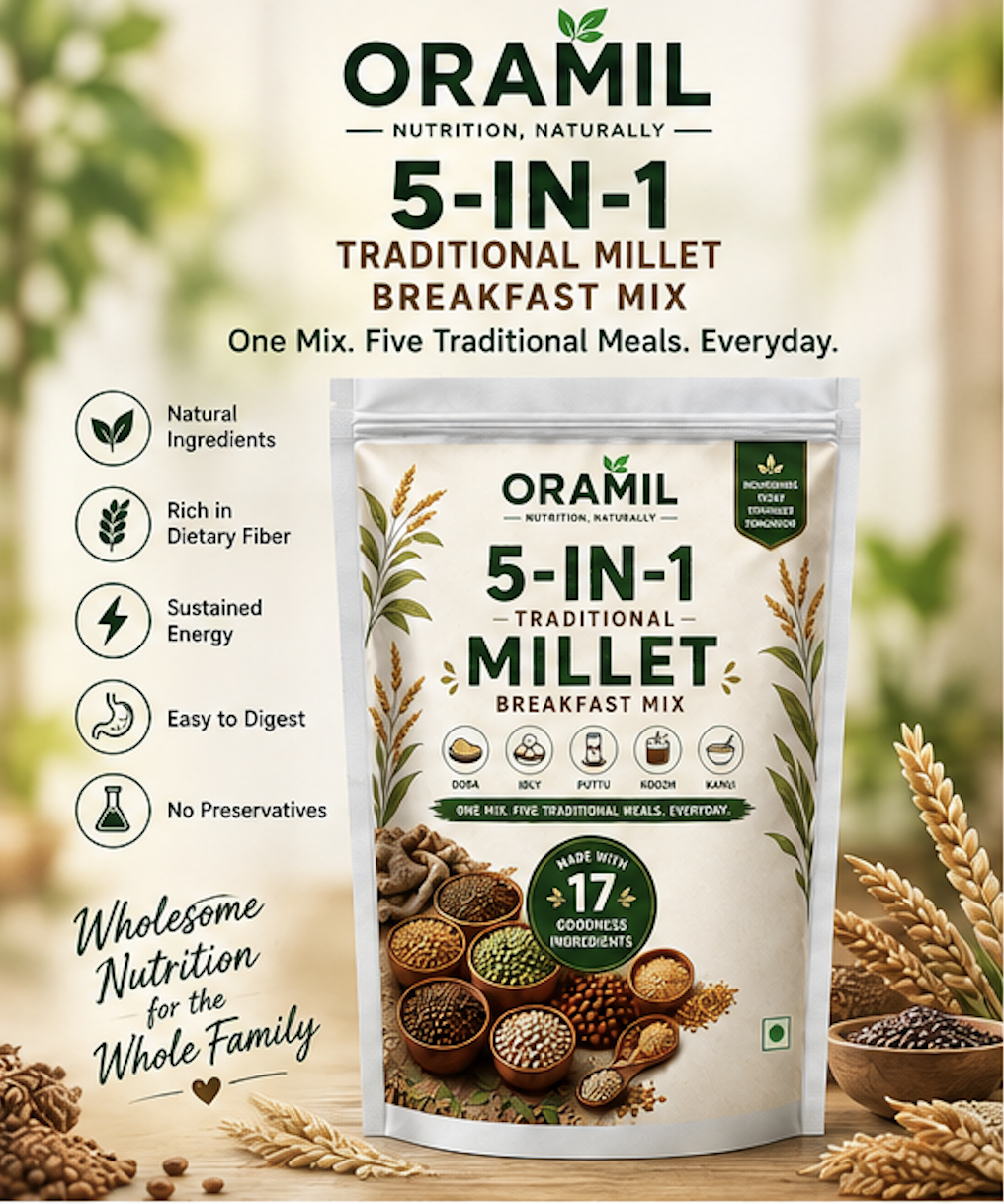
ORAMIL 5-in-1 Millet Mix
17 traditional millets, grains, pulses and seeds in one mix — make Dosa, Idly, Puttu, Koozh and Kanji from a single pack, no preservatives.
Explore 5-in-1 Millet MixHow to cook with bajra
The two classics are bajra roti, a rustic flatbread eaten with ghee or vegetables, and kambu dosa, which is crisp and deeply flavoured.
Bajra also works in khichdi and porridge. If grinding a single grain feels like too much effort on a weekday, a blended millet mix that includes bajra lets you make dosa or idly with just water.
Who should eat bajra
Bajra suits active adults and growing children who need steady, lasting energy. Its iron content makes it a thoughtful addition for families looking to include more iron-bearing whole foods in their diet.
Because it is warming and filling, many people enjoy it most in winter, though there is no rule against eating it year round in moderation.
Eating bajra sensibly
As with any millet, introduce bajra gradually and pair it with vegetables, dals and enough water. It is at its best as a replacement for refined grains rather than an extra.
Rotated with ragi, jowar and the smaller millets, bajra adds welcome variety and a different spread of minerals to the week.
Frequently asked questions
Is bajra good in summer?
Bajra is traditionally considered warming and is eaten more in winter. In summer, many people prefer lighter, cooling millets like foxtail or little millet, or balance bajra with buttermilk-based dishes.
Is bajra gluten-free?
Yes, pearl millet is naturally gluten-free. If you have coeliac disease, choose sources that are certified gluten-free, since millets are sometimes processed near wheat.
Can I eat bajra every day?
You can include bajra regularly as part of a varied diet, but rotating it with other millets gives you a wider range of nutrients and keeps meals interesting.
ORAMIL 5-in-1 Millet Mix
17 traditional millets, grains, pulses and seeds in one mix — make Dosa, Idly, Puttu, Koozh and Kanji from a single pack, no preservatives.
Explore 5-in-1 Millet MixKeep reading: ragi (finger millet): benefits, nutrition and how to use it, jowar (sorghum): the versatile everyday millet, and foxtail millet (thinai): benefits, uses and recipes.