

If you are avoiding gluten, millets are often recommended as a wholesome alternative to wheat. The short answer is reassuring, with one important caveat worth understanding.
The simple answer
Most true millets — ragi, bajra, jowar, foxtail, kodo, little and barnyard — are naturally free of gluten, the protein found in wheat, barley and rye.
That makes them a genuinely useful base for anyone reducing or avoiding wheat in their diet.
Why that is useful
People avoid gluten for different reasons, from coeliac disease to a personal preference to eat less wheat. Millets offer a way to keep eating satisfying grains — dosa, idly, roti, porridge — without wheat.
They bring fibre and minerals along with that flexibility.
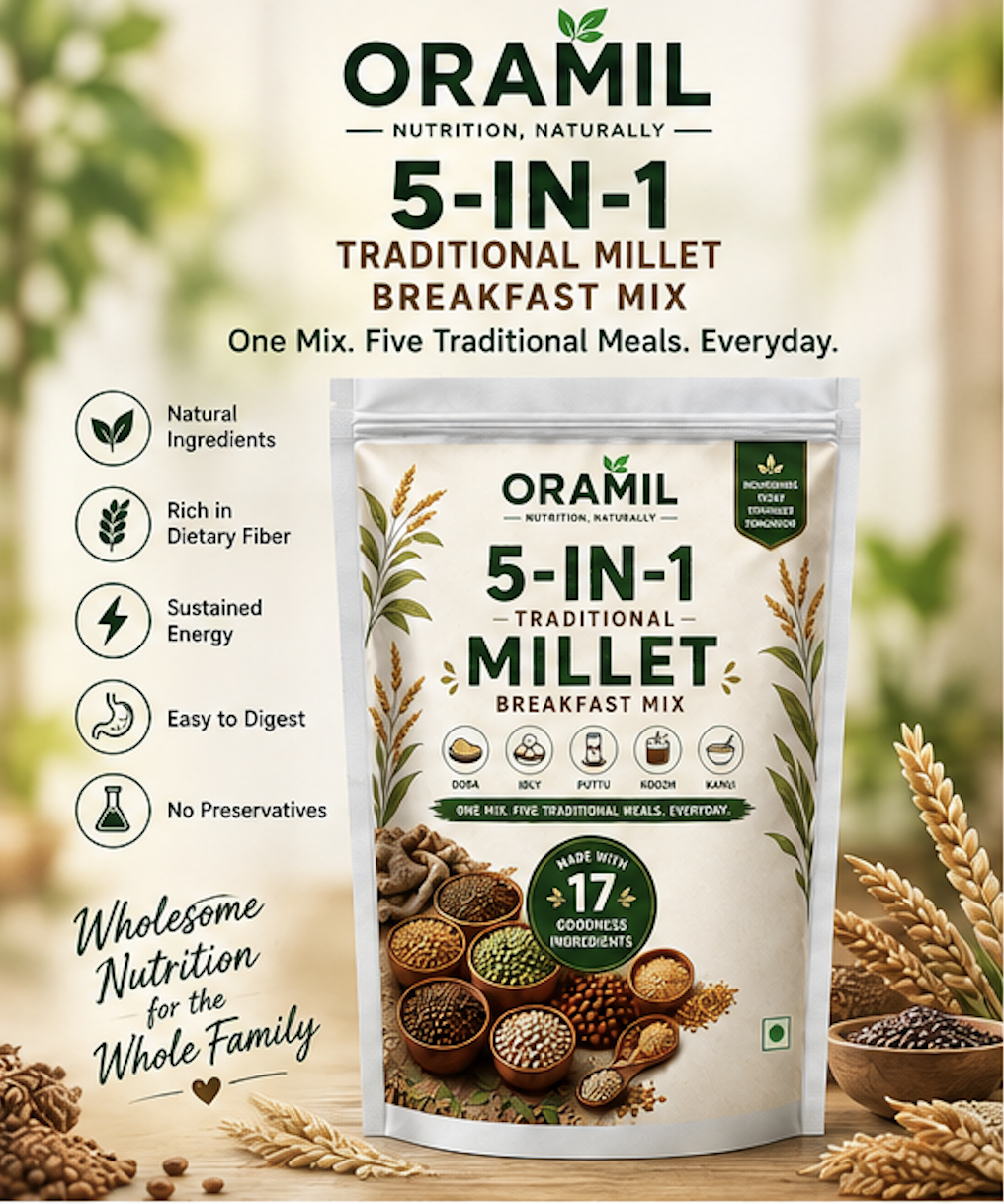
ORAMIL 5-in-1 Millet Mix
17 traditional millets, grains, pulses and seeds in one mix — make Dosa, Idly, Puttu, Koozh and Kanji from a single pack, no preservatives.
Explore 5-in-1 Millet MixThe important caveat
Although the grains themselves are gluten-free, millets are sometimes grown, stored or processed alongside wheat, which can introduce traces of gluten.
Anyone with coeliac disease, who must avoid even small amounts, should choose products that are specifically certified gluten-free.
A note on barley
Barley is sometimes grouped with traditional grains and appears in some blends, but barley does contain gluten. If you are avoiding gluten strictly, check blends for barley and similar grains.
Reading the ingredient list carefully is always worthwhile.
Putting it to use
For most people reducing wheat, naturally gluten-free millets open up a whole range of familiar dishes. A millet breakfast mix lets you make dosa and idly without wheat.
Those with medical gluten restrictions should simply confirm certified gluten-free sourcing before buying.
Frequently asked questions
Are all millets gluten-free?
Most true millets — ragi, bajra, jowar, foxtail, kodo, little and barnyard — are naturally gluten-free. Barley, sometimes grouped with them, does contain gluten, so check blends if you avoid gluten strictly.
Can coeliacs eat millets?
Millets themselves are gluten-free, but they can be processed near wheat and pick up traces. People with coeliac disease should choose products certified gluten-free.
Is ragi gluten-free?
Yes, ragi (finger millet) is naturally gluten-free. For strict medical avoidance, look for certified gluten-free sourcing to rule out cross-contamination.
ORAMIL 5-in-1 Millet Mix
17 traditional millets, grains, pulses and seeds in one mix — make Dosa, Idly, Puttu, Koozh and Kanji from a single pack, no preservatives.
Explore 5-in-1 Millet MixKeep reading: ragi (finger millet): benefits, nutrition and how to use it, bajra (pearl millet): benefits and everyday uses, and jowar (sorghum): the versatile everyday millet.