
Parents hear that kids eat too much sugar, but rarely how much is actually too much. Here is a grounded guide, plus where the sugar really hides and how to quietly cut it.
What counts as added sugar
Added sugar is the sugar put into foods during processing or cooking — the sugar in a biscuit or a health drink — as opposed to the sugar naturally present in fruit or plain milk.
It is the added kind that nutritionists advise keeping in check for children.
How much is sensible
Health authorities generally suggest keeping added sugar low for children — commonly no more than about five to six teaspoons, roughly twenty to twenty-five grams, a day for school-age kids, and less for younger ones.
A single glass of a sugary drink can use up much of that allowance before the day has even warmed up.
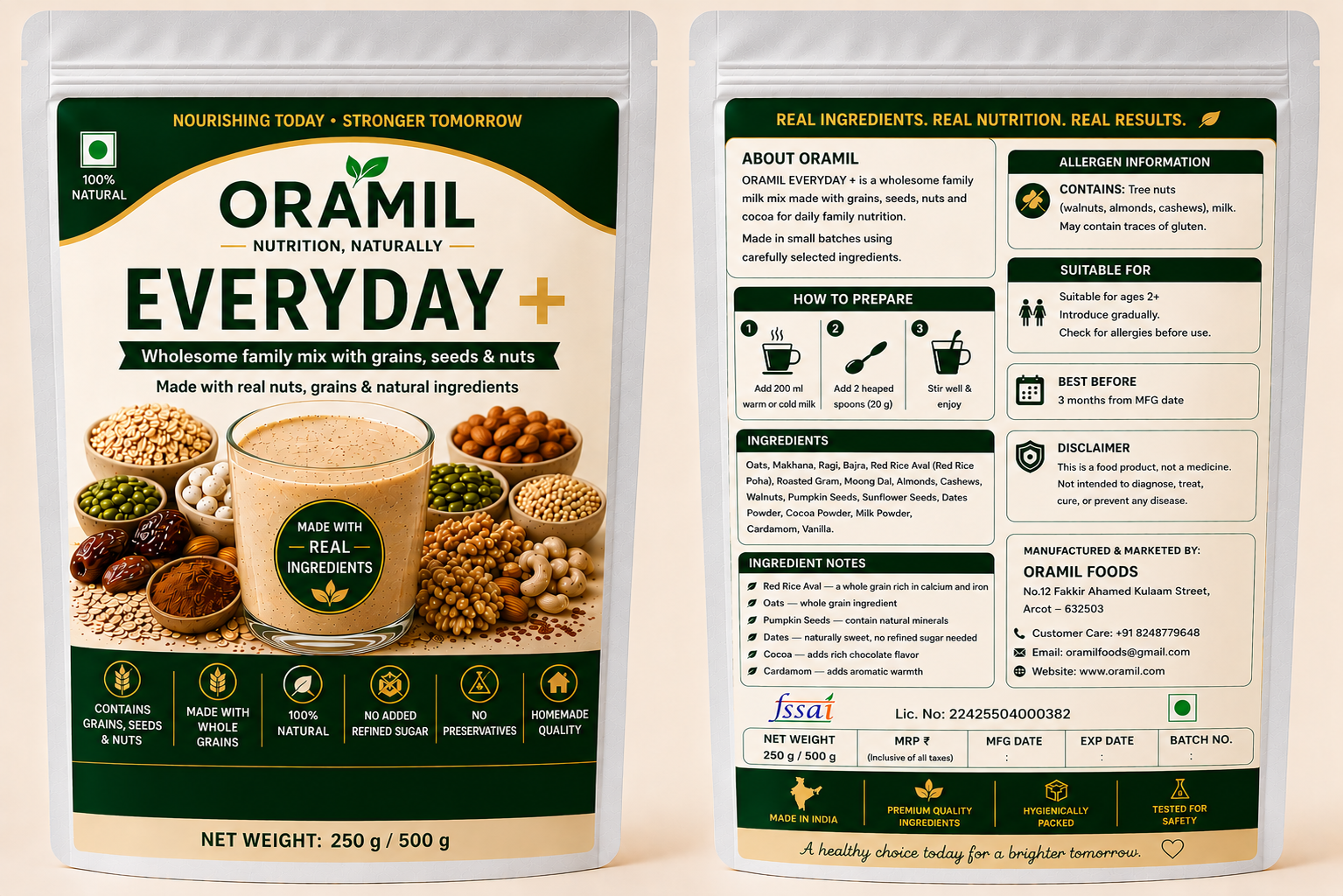
ORAMIL Everyday+
A wholesome daily chocolate mix with millets, makhana, oats, nuts, seeds and cocoa — gentle enough for kids, adults and seniors.
Explore Everyday+Where the sugar hides
Many everyday items are sweeter than they seem — flavoured milks, malted health drinks, packaged juices, biscuits, cereals and sauces. Sugar also appears under many names.
Reading labels and checking where sugar sits in the ingredient list is the simplest way to spot it.
Easy swaps that work
Offer whole fruit instead of juice, plain or lightly sweetened milk instead of very sweet drinks, and treats sweetened with jaggery or dates instead of refined sugar.
A chocolate drink built on nuts, seeds and grains with natural sweetness is a far better daily choice than one that is mostly sugar.
Going gradual
Children's palates adjust faster than we expect. Reduce sweetness slowly and tastes recalibrate within a few weeks.
The goal is not zero sugar, which is unrealistic, but keeping the everyday baseline sensible so treats stay treats.
Frequently asked questions
How much added sugar should a child have per day?
Guidelines commonly suggest no more than about five to six teaspoons (roughly 20-25 grams) of added sugar a day for school-age children, and less for younger ones.
Is the sugar in fruit bad for kids?
Whole fruit contains natural sugar alongside fibre, water and nutrients, and is generally a healthy choice. The concern is added sugar in processed foods and drinks.
How can I reduce my child's sugar intake?
Offer whole fruit over juice, choose less-sweet drinks, pick treats sweetened with jaggery or dates, read labels, and lower sweetness gradually so tastes adjust.
ORAMIL Everyday+
A wholesome daily chocolate mix with millets, makhana, oats, nuts, seeds and cocoa — gentle enough for kids, adults and seniors.
Explore Everyday+Keep reading: is ragi good for babies? a parent's guide, healthy tiffin ideas for school kids, and feeding fussy eaters: practical, kind strategies.