
For generations, Indian mothers have started their babies on ragi. It is gentle, nourishing and deeply traditional. Here is a calm, practical look at why — and how to do it sensibly.
Why ragi is a traditional first food
Ragi, or finger millet, has long been among the first solids given to Indian babies, usually as a smooth porridge. It is easy to cook soft and gentle on little tummies.
As a plant source of calcium and iron, it fits naturally into the nourishing foods families have trusted for weaning.
When to introduce it
Solids generally begin around six months, but every baby is different, so the timing and first foods should follow your paediatrician's guidance.
Ragi porridge is often introduced in this early phase because of its soft texture and mild taste.
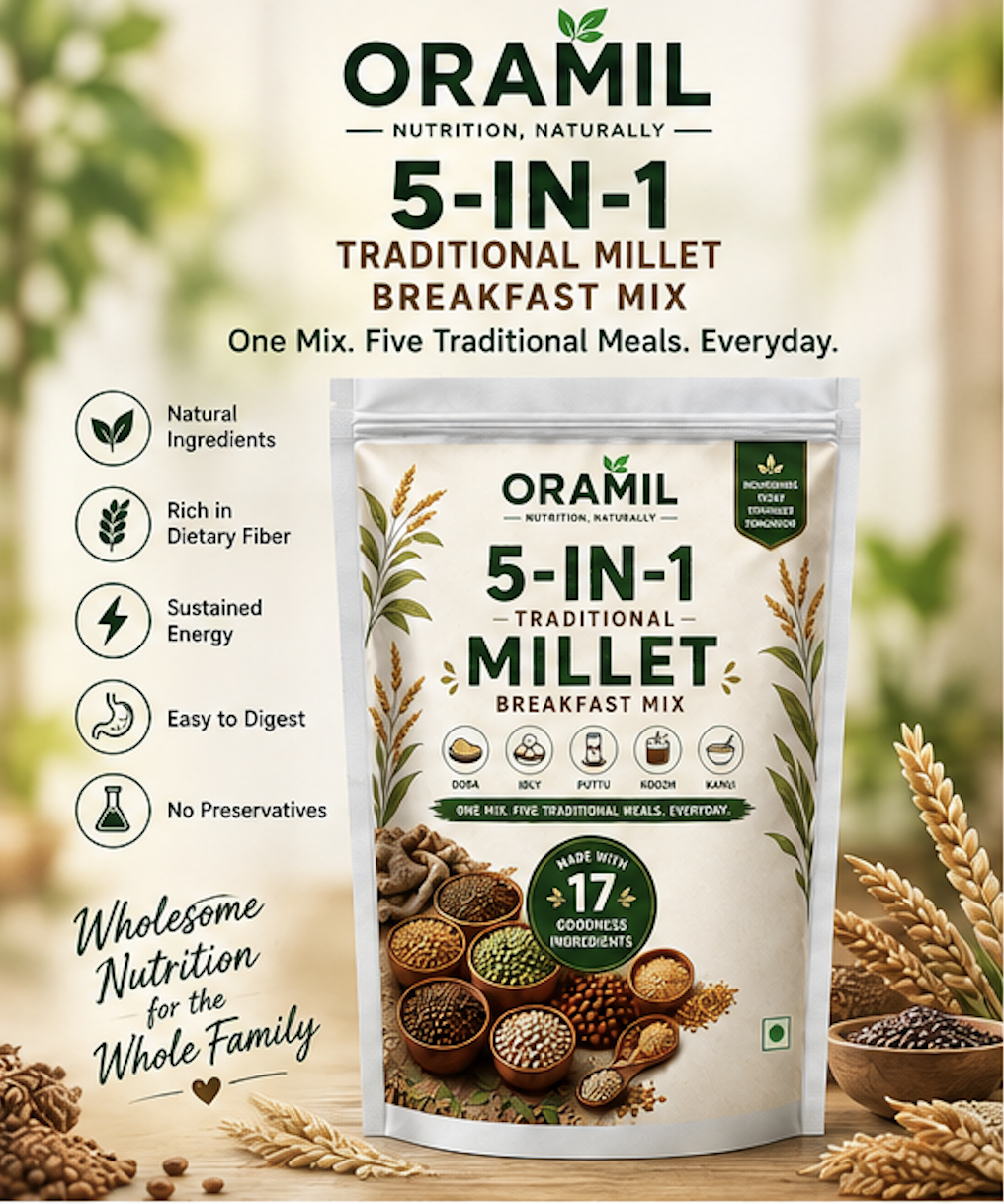
ORAMIL 5-in-1 Millet Mix
17 traditional millets, grains, pulses and seeds in one mix — make Dosa, Idly, Puttu, Koozh and Kanji from a single pack, no preservatives.
Explore 5-in-1 Millet MixHow to prepare ragi for babies
A simple ragi porridge is made by cooking ragi flour or a fine millet blend with water or milk into a smooth, lump-free consistency, thin enough for a young baby.
Start with a small quantity and a thin texture, thickening gradually as your baby grows and accepts it.
Sensible precautions
Introduce any new food one at a time and watch for signs of allergy or intolerance. Keep the porridge smooth and well-cooked, and avoid adding sugar or salt for very young babies.
Because babies' needs are specific, always let your paediatrician guide the details for your child.
Growing with ragi
As children grow, ragi can move from porridge to dosa, idly and malt, keeping a familiar, wholesome grain in their diet.
A traditional millet mix makes it easy to offer ragi-based dishes the whole family can share.
Frequently asked questions
At what age can babies eat ragi?
Ragi porridge is often introduced when solids begin, commonly around six months, but timing varies by baby. Always follow your paediatrician's advice for your child.
Is ragi good for a baby's bones?
Ragi is a plant source of calcium, which supports growing bodies as part of a varied weaning diet. It is one reason ragi is a traditional early food.
Can I give ragi to my baby daily?
Many families include ragi regularly during weaning, but variety matters. Rotate it with other suitable foods and follow your paediatrician's guidance.
ORAMIL 5-in-1 Millet Mix
17 traditional millets, grains, pulses and seeds in one mix — make Dosa, Idly, Puttu, Koozh and Kanji from a single pack, no preservatives.
Explore 5-in-1 Millet MixKeep reading: healthy tiffin ideas for school kids, how much sugar is too much for children?, and feeding fussy eaters: practical, kind strategies.