
If you grew up in an Indian home a generation or two ago, millets were simply breakfast. Ragi koozh in the morning, a kambu (bajra) dosa, a bowl of samai pongal. Then somewhere in the rush toward convenience and polished white staples, these grains slipped off the everyday menu. Today they're making a comeback — and for good reason. This guide walks you through everything a family needs to know, written plainly and without the health-fad hype.
What exactly are millets?
Millets are a group of small-seeded cereal grasses that humans have cultivated for over 7,000 years. They are among the first crops India ever grew. Unlike rice and wheat, which demand a lot of water and careful conditions, millets are hardy: they grow in dry soil, survive on little rain, and ripen quickly. That toughness is exactly why they sustained communities through lean seasons for millennia.
In nutritional terms, millets are whole grains. When they're left unpolished, each grain keeps its bran and germ — the fibre-rich outer layer and the nutrient-dense core. That's the part that gets stripped away when rice is polished white, which is a big reason millets tend to carry more fibre, minerals and slow-releasing energy than the refined staples that replaced them.
Importantly, "millet" isn't one single grain. It's an umbrella term covering about a dozen varieties, each with its own texture, flavour and ideal use in the kitchen. Understanding the main types is the first step to cooking with them confidently.
Why millets disappeared from our plates
It wasn't that millets stopped being good for us. Three things pushed them aside. First, the Green Revolution of the 1960s and 70s rightly prioritised rice and wheat to fight famine, and government support, subsidies and public distribution all flowed toward those two crops. Millets lost their place in the supply chain.
Second, polished white rice and refined wheat became symbols of modern, urban, "arrived" eating, while millets were quietly labelled a poor family's food. Third, convenience won: a bag of rice cooks the same way every time, while millets each behave a little differently and were seen as more work.
The irony is that the very grains dismissed as humble are now recommended by nutritionists worldwide. The United Nations even declared 2023 the International Year of Millets, and India has led a global push to put them back on the table. The wheel has turned — and families are rediscovering what their grandmothers never forgot.
The 9 millets every Indian kitchen should know
Here are the millets you'll most often meet in Indian cooking, with their Tamil and Hindi names so you can recognise them at the shop.
1. Ragi (Finger millet / Keppai)
The most famous of them all. Ragi is a reddish-brown grain prized for being rich in calcium and iron. It's the traditional first weaning food for babies in many South Indian homes, usually as a soft porridge, and it makes wonderful dosa, ragi mudde and the summer cooler ragi koozh. If you only adopt one millet, this is a gentle place to start.
2. Bajra (Pearl millet / Kambu)
A warming, earthy grain especially loved in Rajasthan, Gujarat and across Tamil Nadu. Bajra rotis and kambu dosa are staples. It's a good source of iron and magnesium, and its slightly dense texture makes it filling — a reason it's eaten more in cooler months.
3. Jowar (Sorghum / Cholam)
Mild, versatile and easy to like. Jowar roti (bhakri) is a Maharashtrian and Karnataka favourite, and the grain can be popped like tiny popcorn for a snack. Its neutral flavour makes it an easy first swap for anyone nervous about millets tasting "different".
4. Foxtail millet (Thinai / Kangni)
One of the oldest cultivated millets in India, foxtail is light, quick-cooking and high in fibre. It works beautifully as an upma, pongal or a rice substitute. Families watching their energy through the day often reach for thinai because it's gentle and keeps you full.
5. Kodo millet (Varagu / Kodra)
A small, hardy grain with a slightly nutty taste. Varagu is easy to digest and a popular rice replacement in a simple lemon or tamarind preparation. It's valued for its high fibre content.
6. Little millet (Samai / Kutki)
As the name suggests, the smallest of the group. Samai cooks fast, has a soft texture, and slips easily into pongal, idly, dosa and sweet dishes. It's a favourite for introducing millets to children because the texture is so familiar.
7. Barnyard millet (Kuthiraivali / Sanwa)
Light and quick to cook, barnyard millet is often chosen during fasting in North India. It's high in fibre and lower in calories than many grains, which is why it shows up in lighter, everyday meals.
8. Proso millet (Panivaragu)
A fast-cooking, mild grain that works as a simple rice alternative and in upma. It's less common on urban shelves but worth seeking out for variety.
9. Barley (Barli)
Not a true millet botanically, but it travels in the same traditional-grain company and often appears in millet blends. Barley adds a pleasant chew and soluble fibre, and has long been used in cooling drinks and porridges.
The smartest way to eat millets isn't to pick a single "best" one — it's to rotate several, so your meals carry a wider spread of fibre, minerals and flavours across the week.
The real benefits — and the honest caveats
Millets are genuinely nutritious, but they are food, not medicine. Here's a grounded look at what they offer.
Rich in dietary fibre
This is the headline benefit. Whole millets carry significantly more fibre than polished rice. Fibre slows digestion, helps you feel full for longer, supports gut health and smooths out the rise in blood sugar after a meal. For families used to white rice at every meal, simply adding millets a few times a week is a meaningful upgrade.
Slow-release energy
Because of that fibre and their grain structure, millets tend to release energy more gradually than refined staples. That means fewer mid-morning crashes for school kids and office-goers who otherwise feel sleepy an hour after a heavy white-rice lunch.
A natural source of minerals
Different millets bring different minerals. Ragi is known for calcium, bajra for iron and magnesium, and most millets contribute phosphorus, potassium and B vitamins. Eating a variety is the easiest way to benefit from the full spread.
Naturally gluten-free
Most true millets are naturally free of gluten, which makes them useful for people avoiding wheat. (If you have coeliac disease, look for certified gluten-free sourcing, since millets are sometimes processed near wheat.)
The honest caveats
No single food fixes health. Millets help most when they replace refined grains, not when they're added on top of an already heavy diet. Introduce them gradually so your digestion adjusts, and drink enough water with the extra fibre. People with specific thyroid or kidney conditions should talk to their doctor about quantities. And remember: a millet dosa deep-fried in oil and eaten with lots of sugar is still a treat, not a health food.
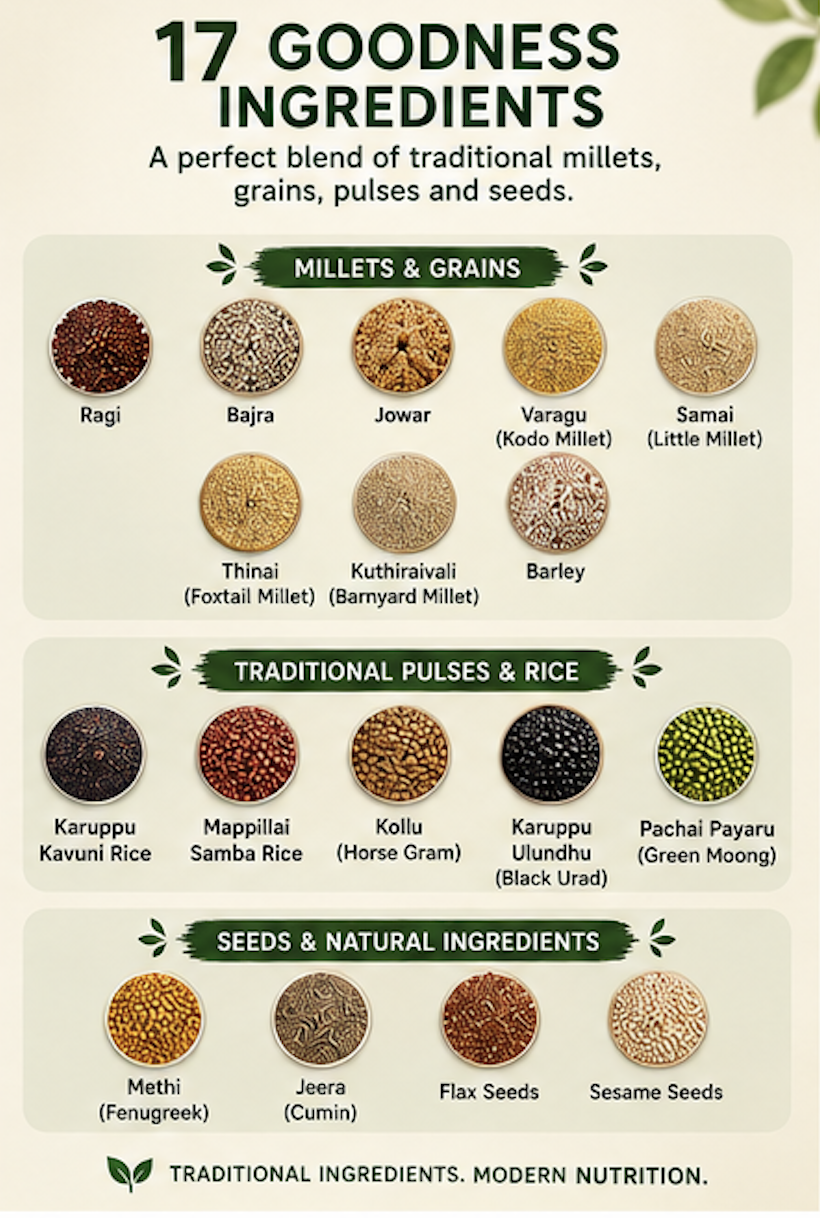
17 millets, grains & pulses in one mix
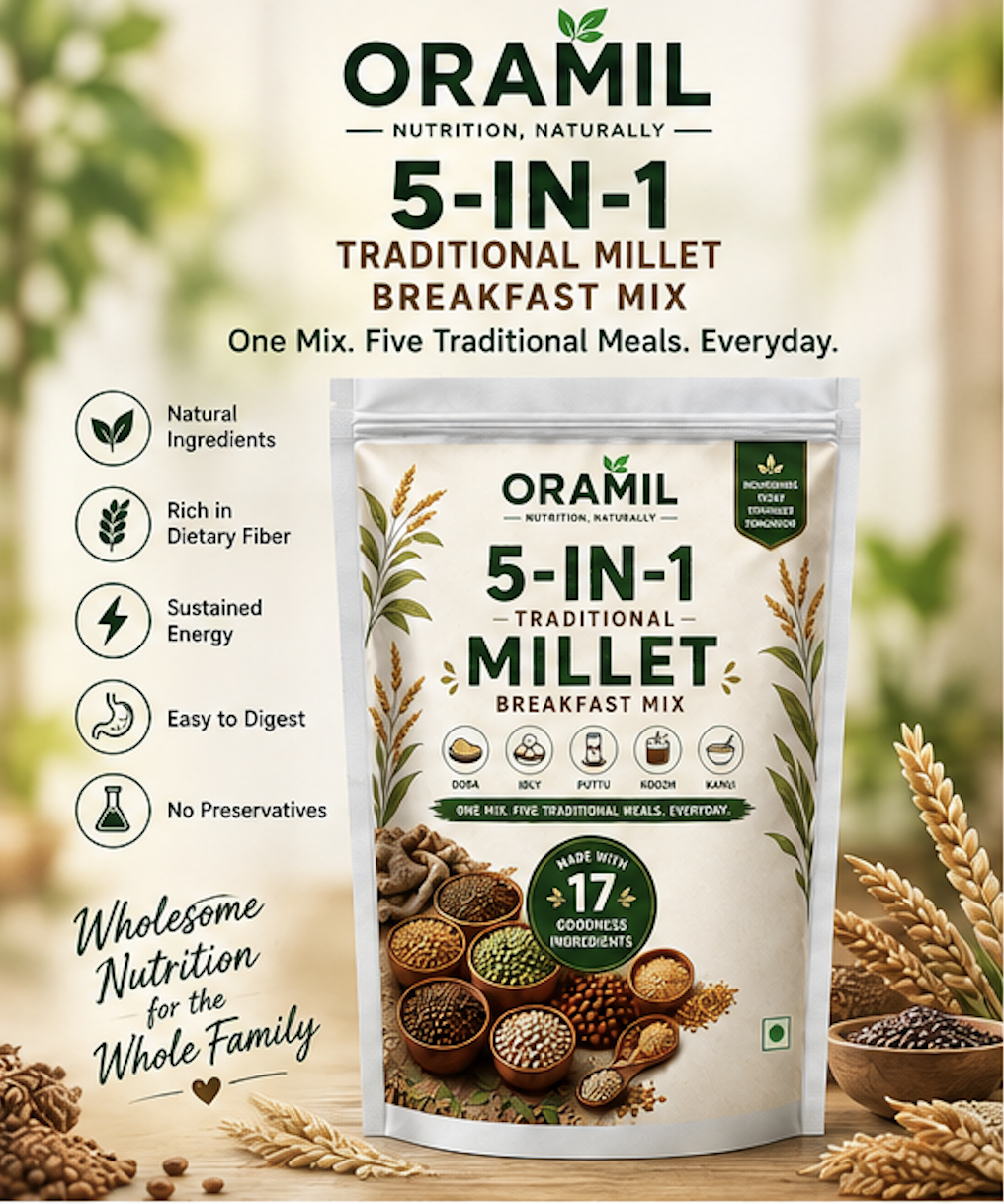
ORAMIL 5-in-1 blends 17 traditional ingredients so you can make Dosa, Idly, Puttu, Koozh and Kanji from a single pack — no measuring a dozen grains yourself.
Explore 5-in-1 Millet MixWho benefits most from millets
Growing children benefit from the steady energy and minerals, especially when millets arrive in familiar, tasty formats like dosa and porridge rather than as something they're told is "healthy".
Busy adults who feel the afternoon slump after refined-carb meals often notice steadier energy when they swap in millets at lunch.
Older family members appreciate the digestibility and fibre, which supports gut comfort and helps manage blood sugar as part of a balanced diet.
Anyone managing blood sugar is frequently advised by nutritionists to favour whole grains like millets over polished rice — though this should always be guided by their own doctor.
How to actually start eating more millets
The theory is easy; the habit is where people stall. These are the switches that actually stick.
Start with one meal, not every meal. Replace your usual breakfast two or three mornings a week with a millet dish. Keep lunch and dinner unchanged at first. Small, repeatable change beats a dramatic overhaul you abandon in a fortnight.
Keep the format familiar. The trick that works in Indian homes is to change the grain but keep the dish. A dosa is still a dosa, an idly is still an idly — your family barely notices the swap, and nobody feels they're being put on a "diet".
Use a ready mix for the weekday rush. Measuring out nine grains on a Tuesday morning is never going to happen. A pre-blended millet breakfast mix removes the friction entirely — you add water, and you've got batter for dosa or idly, or a porridge for koozh and kanji. This is exactly the problem our 5-in-1 Millet Mix was built to solve.
Cook plain millets like rice. Varagu, samai and thinai can simply replace rice in pongal, lemon rice or curd rice two or three times a week. Use a little extra water and give them a few more minutes.
Rotate. Don't eat the same millet every day. Variety spreads the nutritional benefit and keeps meals interesting.
Common mistakes to avoid
Going all-in overnight. Switching every meal to millets in one day often upsets digestion. Ramp up over a few weeks.
Not drinking enough water. More fibre needs more water to do its job comfortably. Keep hydrated.
Buying polished millets. Over-polished millets lose much of the bran that makes them worthwhile. Choose minimally processed, whole versions where you can.
Drowning them in sugar and oil. A millet sweet loaded with sugar is still a sweet. Let the grain's own goodness do the work.
Expecting miracles. Millets are a steady, sensible upgrade to everyday eating — not a cure for anything. Treat them as the dependable staple they are, and they'll serve your family for years.
Frequently asked questions
Are millets good for daily consumption?
Yes. Millets have been a daily staple across India for thousands of years. For most people, replacing some refined rice and wheat with a rotating mix of millets each day is a safe, balanced way to add fibre and minerals. Introduce them gradually, drink enough water, and vary the types rather than eating only one.
Which millet is best for weight loss?
No single millet is a weight-loss cure. Foxtail (thinai), little (samai) and barnyard (kuthiraivali) millets are popular for lighter meals because they're high in fibre and keep you full longer, which can help you eat less overall. Weight management depends on your total diet and activity, not one ingredient.
Can children eat millets?
Yes, millets suit children as part of a varied diet. Ragi is a traditional first food in many Indian homes. Start with small quantities, cook them soft, and watch for any allergies. For fussy eaters, familiar formats like dosa, idly and porridge work best.
Are millets gluten-free?
Most true millets — ragi, bajra, jowar, foxtail, kodo, little and barnyard — are naturally gluten-free. However, they're often processed alongside wheat, so anyone with coeliac disease should check for certified gluten-free sourcing.
What is the easiest way to start eating millets?
Swap one familiar meal. Use a ready millet breakfast mix to make dosa, idly, puttu, koozh or kanji, or cook plain millets in place of rice two or three times a week. Keeping the format familiar makes the switch painless for the whole family. Our 5-in-1 Millet Mix is designed for exactly this.
One mix. Five traditional meals.
Skip the dozen jars of grain. ORAMIL 5-in-1 brings 17 millets, grains, pulses and seeds together so your family can eat traditional, wholesome breakfasts on even the busiest mornings.
Shop 5-in-1 Millet MixKeep reading: 15 traditional South Indian breakfasts you can make from one mix and healthy chocolate drinks for kids without refined sugar.